
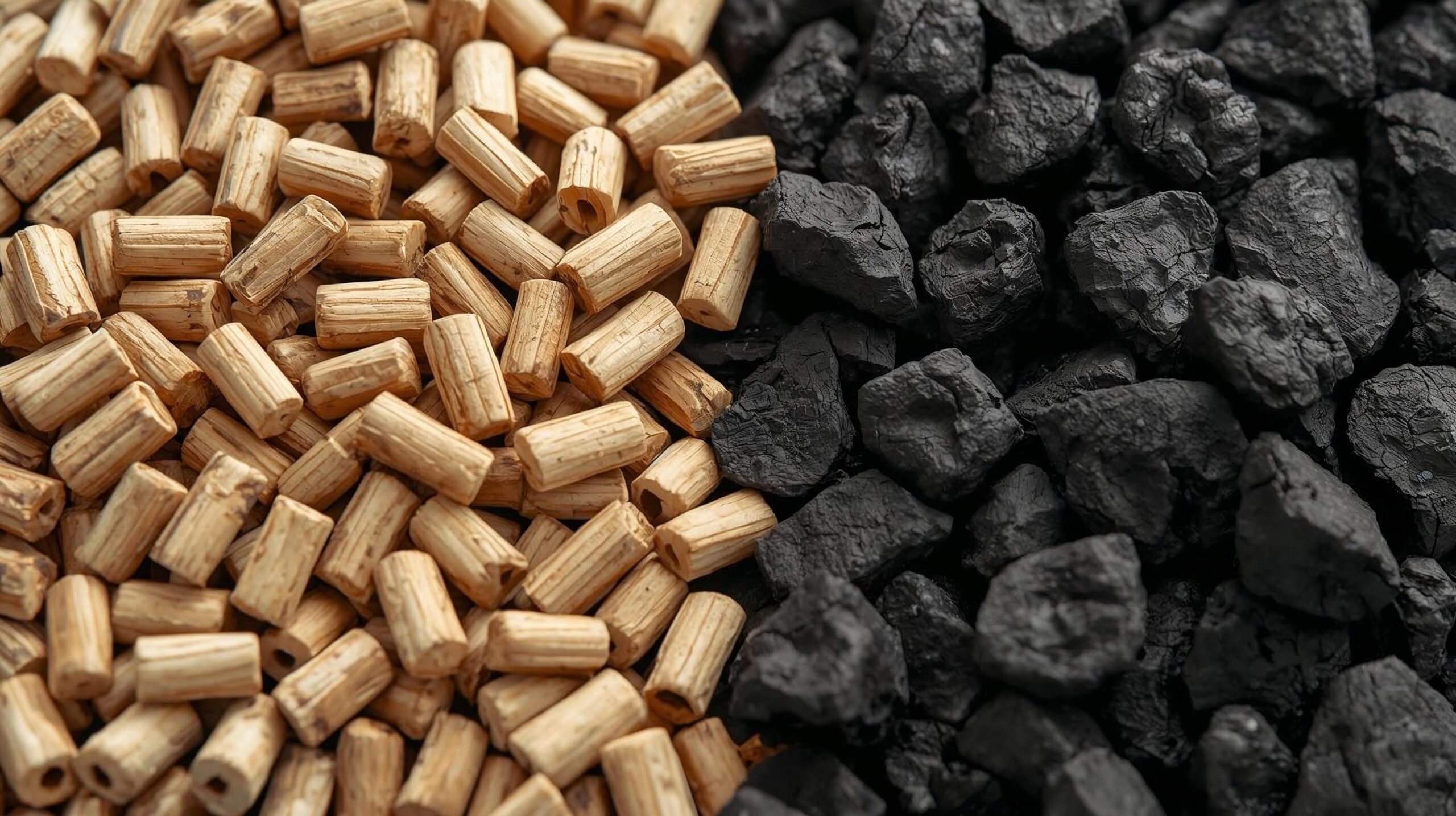
As global industries transition toward cleaner and more sustainable energy sources, many are asking the same question:
Can wood pellets truly replace coal as an energy source?
Both fuels have long been used for power generation and heating, but they differ greatly in efficiency, environmental impact, and long-term cost. This article breaks down how wood pellets stack up against coal and why many businesses are making the switch.
Energy Efficiency: Pellet Power vs. Coal Combustion
Energy density determines how much heat a fuel can produce.
- Coal: Typically offers between 6,000–7,000 kcal/kg of energy.
- Wood Pellets: Contain around 4,500–5,000 kcal/kg.
While coal has a slightly higher raw energy value, wood pellets burn more efficiently in modern biomass boilers.
They have lower moisture content (below 10%), which means cleaner, more complete combustion with minimal residue.
In practice, wood pellet systems can achieve similar thermal efficiency to coal while producing far fewer emissions, a major advantage for energy plants focused on both performance and compliance.
Environmental Impact: The Carbon Advantage
One of the most significant differences lies in carbon emissions.
| Factor | Coal | Wood Pellets |
|---|---|---|
| CO₂ Emissions | Very high | Carbon-neutral |
| Sulfur Content | High | Negligible |
| Particulate Emissions | High | Low |
| Renewable Source | ❌ No | ✅ Yes |
Coal is a finite fossil fuel. Burning it releases carbon that’s been locked underground for millions of years, directly contributing to greenhouse gas buildup.
Wood pellets, on the other hand, are considered carbon-neutral. The carbon released when burning them equals the carbon absorbed by trees during their growth. When sourced from sustainably managed forests, this creates a closed carbon cycle that supports long-term environmental balance.
By switching to pellets, industries can reduce CO₂ emissions by up to 80% while maintaining reliable energy output.
Cost Comparison: Beyond the Price per Ton
At first glance, coal might appear cheaper in raw cost per ton. However, the total cost of energy generation tells a different story.
Let’s look at the broader picture:
- Fuel Cost: Coal often fluctuates due to market and import dependency. Pellets offer more price stability, especially when sourced locally or regionally.
- Maintenance Cost: Biomass systems running on pellets have less corrosion and ash buildup, lowering cleaning and maintenance costs.
- Emission Compliance: Governments worldwide are implementing carbon taxes and emission standards. Using coal may incur environmental penalties, while pellet use can qualify for renewable energy incentives.
In total cost of ownership, wood pellets often outperform coal, especially for industrial users with long-term sustainability goals.
Storage, Handling, and Safety
Handling fuel safely and efficiently is crucial in large-scale operations.
- Coal: Bulky, dusty, and prone to spontaneous combustion in humid environments.
- Wood Pellets: Compact, low-dust, and easy to store in silos or bags.
Pellets’ uniform size and density make them ideal for automated feeding systems, minimizing labor and operational complexity.
They also generate less residue and ash, keeping facilities cleaner and safer.
Sustainability and Energy Transition
Coal mining causes long-term damage to ecosystems and air quality.
Wood pellet production, when managed responsibly, utilizes waste byproducts from the timber industry — sawdust, shavings, and wood residues that might otherwise go unused.
This circular approach not only supports sustainable forest management but also helps reduce waste and deforestation pressures.
In addition, more countries are adopting renewable energy mandates that encourage industries to replace fossil fuels with biomass alternatives like pellets.
For energy producers, switching to wood pellets is both a strategic and compliant move in line with global carbon reduction goals.
Why Industries Are Making the Switch
From power plants to manufacturing facilities, more organizations are moving from coal to biomass for reasons beyond sustainability alone:
- Lower emission targets – Meet local and global environmental standards.
- Energy security – Reduce dependency on volatile coal markets.
- Brand reputation – Position your business as environmentally responsible.
- Operational efficiency – Cleaner combustion, less downtime, and easier storage.
The shift to pellets isn’t just an environmental decision. It’s a smart business strategy for long-term resilience.
Why Choose Bioterra Wood Pellet
At Bioterra Renewables, we provide premium-grade wood pellets produced with consistency, sustainability, and export readiness. Our pellets deliver:
- High calorific value (>4,300 kcal/kg)
- Low ash and moisture content
- Reliable bulk supply for industrial use
- Sustainably sourced raw materials
Whether you’re transitioning from coal or expanding renewable capacity, Bioterra’s wood pellets are designed to support efficient, large-scale, and compliant energy production.
⚡ Make the Switch Today
Looking for a cleaner, more sustainable alternative to coal?
- Is Binchotan Worth the Cost? A Buyer’s Perspective
- Wood Chips Supply Chain from Indonesia: Sourcing, Drying, and Transport
- Handling and Storage Best Practices for Exporting Charcoal Products
- Wood Pellets for Industrial Boilers: Performance Factors Beyond Certification
- Coconut Shell Charcoal for Shisha and BBQ: Key Differences Buyers Should Know



0 Comments